
Consumer Dining Slows as Budgets Tighten and Weather Cools

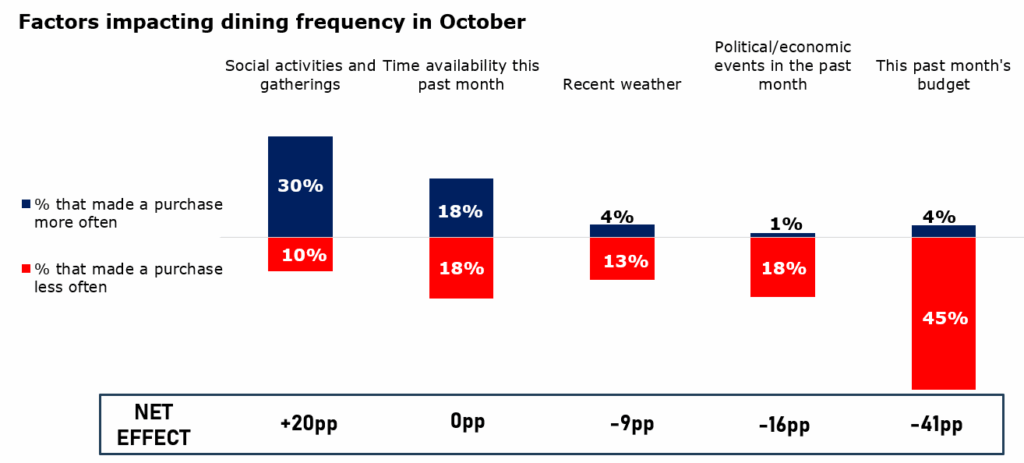
Restaurants Canada’s Consumer Dining Index declined to 89.9 in October 2025, marking the lowest level since March 2025. This represents a 6.1% month-over-month decrease from September’s index of 95.7. As colder weather sets in, more Canadians are cutting back on dining out, with 13% of respondents reporting that recent weather conditions caused them to purchase meals out less often.
However, the dominant driver of reduced dining frequency remains financial pressure. Nearly half of Canadians say they are dining out less often due to monthly budget constraints. Lunch occasions experienced the steepest decline, with 18% of Canadians purchasing lunch from a restaurant once a week or more, down from 23% in September.
This pullback aligns with Restaurants Canada’s latest forecast. Commercial foodservice sales were projected to grow by 6.1%, and the actual performance matched this expectation. Following a 7.3% surge in the second quarter due to a sharp boost in domestic tourism, a slowdown is anticipated in the coming months due to weak consumer confidence and high cost of living.
These headwinds will restrain foodservice sales growth to 2.3% in 2026, with stabilization expected in 2027 at 3.6%. Segment-wise, quick-service restaurants are projected to grow by 6.2% in 2025, outperforming full-service restaurants at 4.9%.
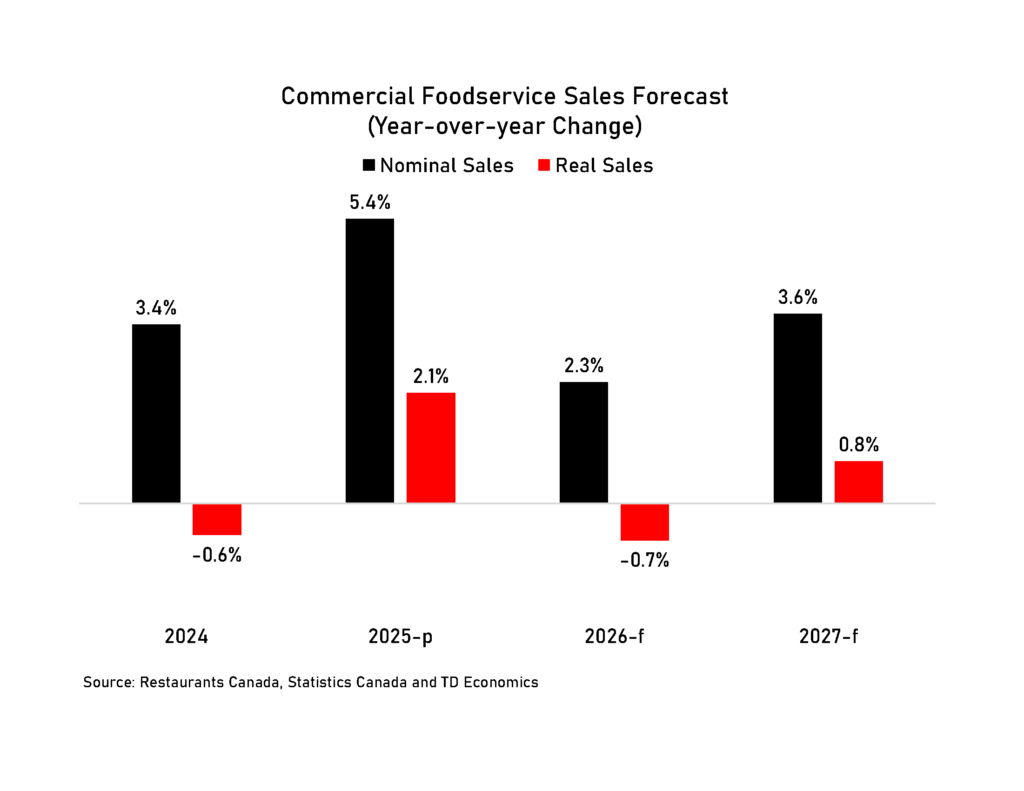
The forecasted slowdown ahead highlights the need for operators to remain agile, focus on value-driven offerings, and prepare for more cautious consumer behaviour in the coming year.
To learn more about shifting consumer habits, click here to read the full October 2025 REACT report. For detailed outlooks and projections by segment, you can also access the latest Quarterly Forecast here.

As a Research Analyst with Restaurants Canada, Sara Hamdy contributes to a research program that helps make Restaurants Canada a trusted source of insight for and about Canada’s $124-billion foodservice industry. Sara develops and maintains analytical reports and interactive dashboards that present key economic and market trends in a clear and engaging way for members and the public.
Her work supports Restaurants Canada’s advocacy and industry initiatives by transforming complex data into accessible information that guides operators, policymakers, and media.