
From Vancouver to Ottawa: Key Advocacy Updates & Priorities
I recently participated in the Destination Canada NorthStar Tourism CEO Summit in Vancouver, where tourism sector leaders aligned on Canada’s opportunity to capitalize on shifting global travel patterns and the value of the tourism sector to the Canadian economy. The discussion reinforced the need for coordinated advocacy to strengthen competitiveness, support tourism growth, and ensure that growth translates across all tourism sectors and regions.
While in Vancouver, I had the opportunity to engage with British Columbia members to discuss the current economic operating climate and the challenges they face, both regionally and nationally. From rising input costs, ongoing labour shortages—particularly tied to immigration and Temporary Foreign Worker access—and the need for stronger recognition of the sector’s economic contribution in public policy decisions, the concerns I heard in B.C. reflect the challenges that restaurants are facing across the country. Our advocacy efforts remain active across these files, with an increased focus on shaping industry perception and ensuring decision-makers understand that restaurants are employers of choice and essential contributors to Canada’s national economy and the communities they serve.
A key part of our ongoing work is our public-facing efforts through national and regional media to build broader public and political support. In addition to several media interviews over the past two weeks, we have had targeted op-eds published by TorStar and Post Media outlets. One op-ed focuses on rural workforce challenges and youth employment. Another highlights our Food is Food campaign in response to the Manitoba budget announcement removing the PST from all prepared food items in grocery outlets, limiting consumer choice and putting restaurants at a competitive disadvantage.
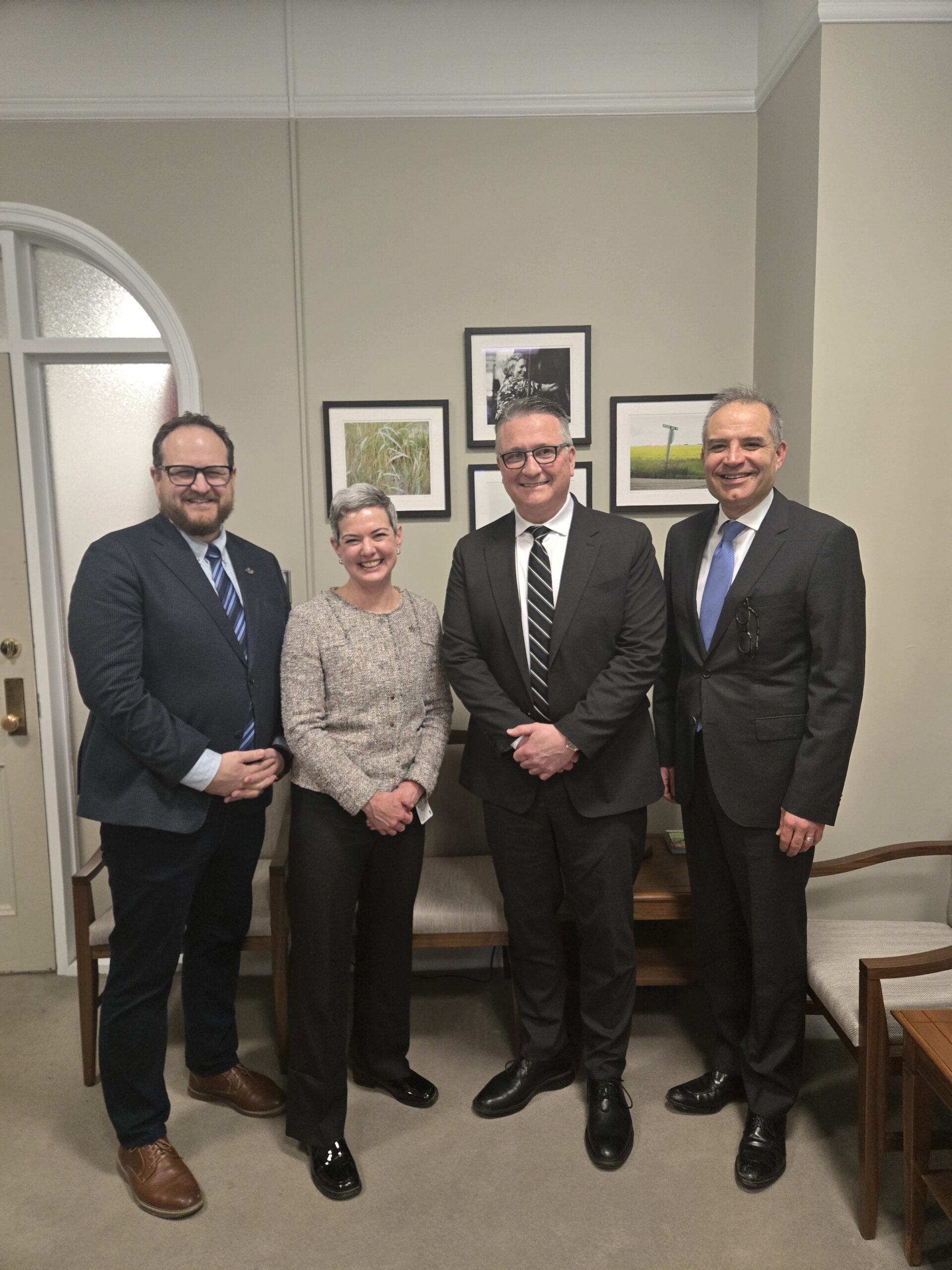
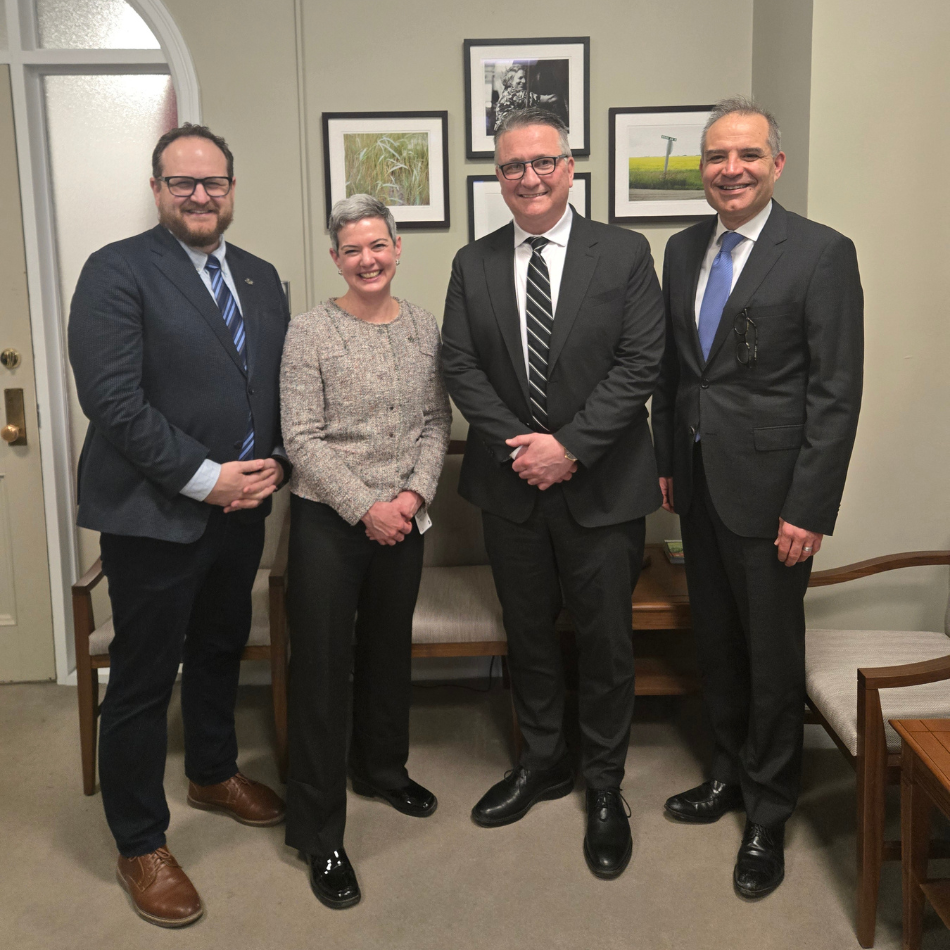
I was in Ottawa last week on the heels of the three federal byelections which moved the Liberal government from minority to majority status. I was able to engage on key priorities through a series of meetings throughout the week, including with MP Patrick Weiler and Senator Sorensen, who co-chair the Parliamentary Tourism Caucus. The all-party caucus remains a valuable forum to educate MPs and senators on the economic importance of our sector, and to create champions to support our advocacy efforts, including on workforce constraints in restaurants, which remains a critical limiter of tourism capacity and visitor experience.
We also met with The Honourable Heath MacDonald, Minister of Agriculture and Agri-Food to reinforce the role of restaurants as a key demand driver within Canada’s agriculture and agri-food system. With over 65 per cent of foodservice inputs sourced domestically, the sector is integral to supporting agricultural producers and the broader agriculture sector in Canada, providing another avenue to align closely with government objectives in support of our industry.
Additionally, while in Ottawa we participated in the Canada-U.S. Trade Council Day on the Hill to ensure the restaurant sector remains represented in broader economic and trade discussions. This included conversations with Industry Minister Mélanie Joly on strengthening Canada’s economy in the face of current pressures, and Canada-U.S. Trade Minister Dominic LeBlanc discussing collaboration in a rapidly changing global environment. Along with our discussions with senior trade officials in Global Affairs Canada, these engagements are critical to ensuring our sector is included in the government’s economic and trade agenda as a major employer and economic contributor across Canada.
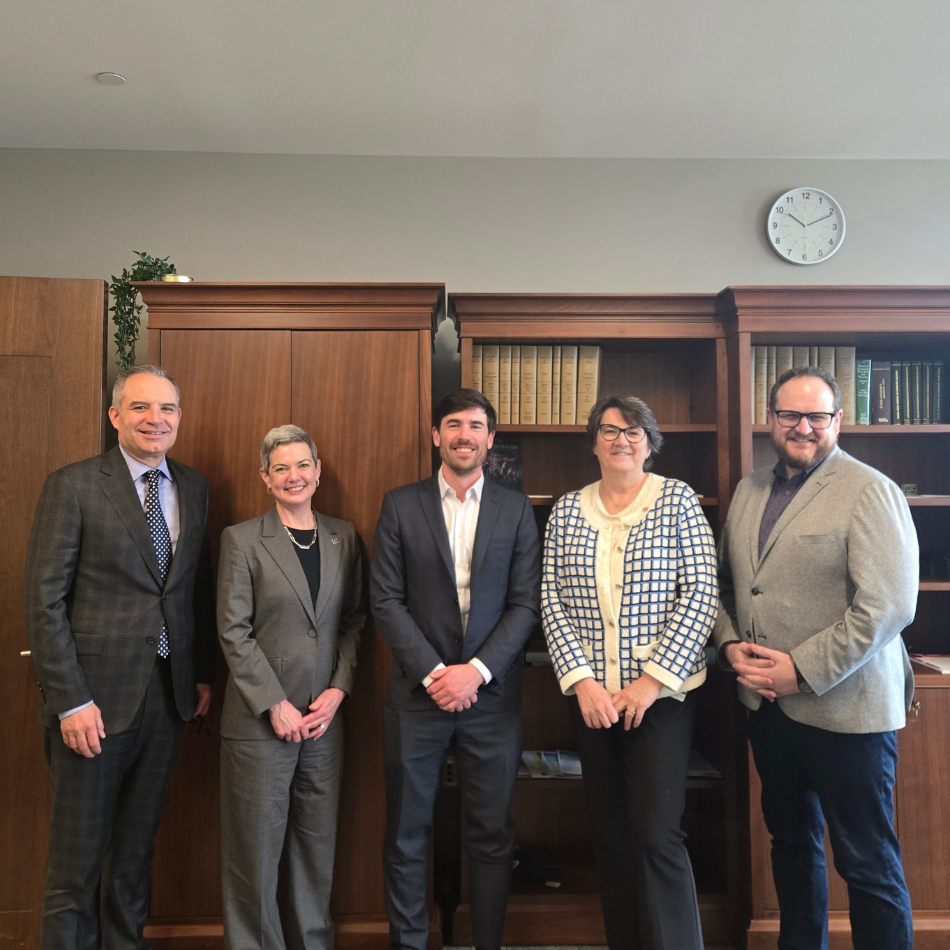

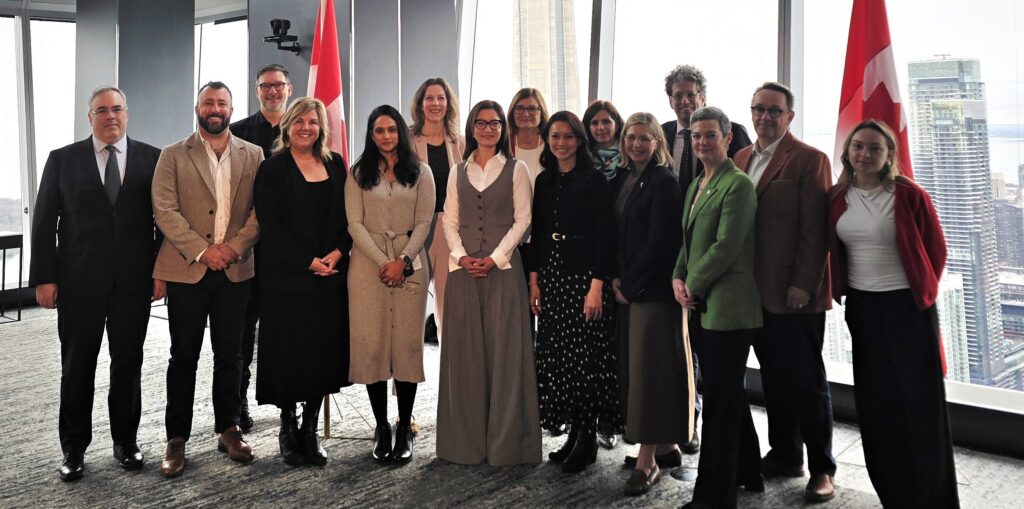
On our federal advocacy, I closed out last week by joining the Secretary of State for Small Business and Tourism, Rechie Valdez, in Toronto for an announcement of federal funding of $15 million over three years to renew the International Convention Attraction Fund. Restaurants Canada partnered with other hospitality sector organizations in asking the government to renew this program, which can catalyze private investment that flows to the foodservice and hospitality sectors, protecting thousands of jobs. Without ICAF’s renewal, Canadian cities would be unable to compete with international destinations that offer millions in financial support for these bids in the global business events market.
On a related note, we invite you to register for our upcoming webinar, How Foodservice Businesses Can Prepare for Major Sporting Events, taking place on Tuesday, May 5, at 2PM ET. Tourists eat, drink, and gather—making foodservice businesses central to how they experience a destination and where much of their spending happens.
With FIFA World Cup 2026 on the horizon, this webinar brings together perspectives from Destination Vancouver and Destination Toronto to unpack what’s coming: visitor flow, citywide momentum, and the ripple effect across local businesses. Paired with a real operator perspective and insights from Restaurants Canada’s Regional VPs, the conversation grounds big-picture demand in the day-to-day realities of delivering hospitality and service to new audiences. Don’t miss this opportunity to maximize your opportunity during this important moment for Canada and local businesses.
Looking ahead, the coming months will focus on sustained national engagement ahead of the summer legislative recess. We will continue to prioritize timely insights, data, and forecasting to support members navigating ongoing economic uncertainty, alongside expanded engagement through upcoming town halls and the release of our next Quarterly Report in the coming weeks. Stay tuned for more on these!
FEDERAL UPDATE
From Matt Triemstra | Vice-President, Federal Affairs
Majority Government
Following three federal byelections on April 13 and a series of floor crossings in the House of Commons in recent weeks, the Liberal government has now officially moved from minority to majority status. With the next federal election now not expected until 2029, this provides a more stable and predictable timeline to advance our industry’s long-term goals.
The shift to a majority mandate will likely trigger a restructuring of House of Commons committees, and rumours persist in Ottawa about a possible cabinet shuffle in the coming weeks or months. Our government relations team is prepared for these changes and we will adapt our advocacies strategies as needed.
Parliamentarian and Government Engagement
Following the House of Commons’ return from the Easter break, our Ottawa team has been actively meeting with key government and parliamentary stakeholders, including Agriculture Minister Heath MacDonald; the senior staff to the Minister of Immigration; MP Patrick Weiler and Senator Karen Sorensen, Co-Chairs of the Parliamentary Tourism Caucus; and a number of other Liberal and Conservative MPs.
SOCAN – Copyright Board Update
Despite formal objections from Restaurants Canada, the Copyright Board has approved inflationary increases for SOCAN Tariff 18 (2023–2025), which applies to recorded music played for dancing in establishments including restaurants and bars. Though this outcome is not a surprise, rates for these venues will rise as a result of the decision, including additional surcharges for capacities exceeding 100 patrons. We are reviewing the decision to guide our approach to future SOCAN tariff challenges.
SUSTAINABILITY UPDATE
From Jillian Rodak | Vice-President, Sustainability
Ontario EPR consultation
Restaurants Canada is seized of the financial and operational pressures many of our members are facing from Ontario’s EPR program. While the Ontario Government has amended the EPR regulation numerous times over the past five years, environmental outcomes have not improved, program costs continue to rise, and operational inefficiencies persist.
On April 2, the Ministry of the Environment, Conservation and Parks opened a consultation on a new set of proposed amendments to Ontario’s EPR program. Two aspects of the proposal impact Ontario members who are obligated under the EPR Blue Box Program:
- Proposed removal of the penalty cap that can be issued to producers for non-compliance with the regulation (There is currently a $1 million maximum administrative penalty).
- Proposed increase to Ontario-based recycling requirements by adding provisions for processing materials in Ontario.
Of course, Restaurants Canada will submit a response to this specific consultation, but more generally, we are securing meetings with senior officials, Ministers and political staff to continue to raise our concerns with EPR.
Metro Vancouver’s draft Solid Waste Management Plan
Metro Vancouver presented a draft Solid Waste Management Plan for the Regional District (representing 21 municipalities) to the Zero Waste Committee on April 2. If implemented, the draft plan would serve as the regulatory framework for waste management in the region over the next 10 years.
Several priority areas have direct implications for the restaurant industry including:
- Scaling up reusable dishware for dine-in.
- Establishing new diversion targets for the commercial sector.
- Phasing out multi-material products (e.g., coffee cups).
- Improving participation in green bin programs in the commercial sector.
Restaurants Canada will be meeting with select members of the Greater Vancouver Sewerage and Drainage District Board in advance of their meeting on April 24 to address the potential impacts of this plan on the foodservice industry. We will keep you informed.
ATLANTIC CANADA UPDATE
From Janick Cormier | Vice-President, Atlantic Canada
TFW Program Cap Increase for Rural Businesses
As of April 14, restaurants in rural Nova Scotia will be able to benefit from the temporary increase in the cap on temporary foreign workers. Nova Scotia was the first province to opt in to the federal.
Although discussions with the governments of New Brunswick and Newfoundland and Labrador have been positive, they have yet to officially opt in to the federal increase. We will continue to press this issue in government meetings and through our media outreach.
Nova Scotia: Door Staff Training
This week, Restaurants Canada will be meeting with Alcohol and Gaming to review their proposal for door staff training regulations. Legislation passed last fall introduced mandatory training, background checks and stronger oversight for all door and security staff at bars in the province. We will share further updates as we learn more about the planned rollout and timelines.
PEI Budget 2026
Finance Minister Jill Burridge tabled the Prince Edward Island 2026-2027 operating budget last week, which provided some relief for businesses. The small business threshold has been increased from $500,000 to $600,000 and the corporate tax rate has been lowered by 1 per cent; however, the Minister warned of tough choices ahead as the province projects a $410 million deficit. Please refer to the note to members last week with more highlights.
CENTRAL CANADA UPDATE
From Kris Barnier | Vice-President, Central Canada and the North
Manitoba: Fighting for PST Fairness
As part of Budget 2026, the Manitoba government announced an exemption from the PST for prepared meals sold in grocery stores, but did not commit to extend the exemption to comparable meals sold in restaurants and other venues. Restaurants Canada has been pressuring the provincial government to change course – not only does the measure limit consumer choice, but the grocery exemption puts restaurants at an unfair disadvantage. We have been meeting with cabinet ministers and staff to press for policy change on this matter, meeting last week with the ministers of Finance, as well as the ministers responsible for Tourism and Labour, to demand fairness for restaurants and their customers. The Winnipeg Free Press published an op-ed [AP1] by Restaurants Canada CEO Kelly Higginson calling for fairness for restaurant businesses, as well as their customers and employees.
Manitoba Opts in to TFW Cap Increase in Rural Areas
Following Restaurants Canada’s advocacy with the government, Manitoba has opted in to a federal initiative to increase the cap on temporary foreign workers for rural employers from 10 to 15 per cent. While the measure is only temporary, it is a step in the right direction to help restaurants address near-term labour shortages, as outlined below: These measures are in effect for LMIA applications submitted on or after April 14, 2026. Additionally, the Manitoba government is pushing Ottawa to help address labour shortages by increasing its provincial nominee allocations.
Ontario: Uniform: Passing On Costs to Employees
Last week, the province announced plans to introduce legislation to “ban employers from charging employees for required uniforms.” This announcement is disappointing, adding yet another cost for some members at a time of ongoing cost increases. The announcement was also unexpected. The Ministry of Labour had reached out to Restaurants Canada within the past month to ask for our industry’s reaction to the general concept behind the announcement, though it had been positioned as largely a blue-sky scoping exercise aimed at identifying possible policy measures to advance. We had immediately expressed our opposition to any measure of this kind, following up in subsequent conversations with data and arguments to support our opposition. We also engaged the Premier’s office to ensure they understood the negative impact that such a measure could have on restaurants’ bottom lines. Restaurants Canada will be continuing our push to make clear how inappropriate it is for the government to be imposing additional costs at a time of ongoing escalating operating costs. In addition, we will be educating the government on the practical realities around uniforms in the sector, which should have informed their approach, and which they will now have to navigate as they define this policy.
Ontario: New LCBO Pricing Model & Changes to Customer Service
On April 1, the LCBO and Government of Ontario introduced a new wholesale pricing model, replacing the Licensee Discount system and updating procurement processes. To support our advocacy on alcohol pricing, we have sent a survey to Ontario members seeking feedback on how these changes are affecting your business. Specifically, we want to know whether your business is better or worse off under the current model than it was under the previous 10 and 15 per cent discount models, both overall and by major product category.
If you have any questions or would like to discuss your experience, please reach out to kbarnier@restaurantscanada.org.
Ontario Food Summit
Restaurants Canada attended the Grow Ontario Food Summit, hosted by Agriculture Minister Trevor Jones. Discussions focused on strengthening and ensuring the sustainability of Ontario’s agricultural sector. In conversations about Ontario’s broader public policy objectives, we emphasized the need for governments to take action to help lower and contain food prices for both consumers and restaurants, while ensuring that food is taxed fairly and consistently regardless of where it is sold.
Ontario: TFWs In Rural & Remote Areas
Restaurants Canada met with the office of Labour Minister David Piccini, and with the Premier’s Office, to urge the province to opt in to the federal government’s temporary measure allowing employers in rural regions to raise their temporary foreign worker cap from 10 % to 15 %. We have continued to press the government on the urgent labour shortages affecting our sector, particularly in rural areas, and have been advised that our request is under consideration.
Northwest Territories
The Government has released a five-year tourism strategy. The plan speaks to the need to support regional marketing and business development, and to help ensure labour is accessible for tourism and hospitality sectors. Restaurants Canada will review the plan in greater detail and engage the government to support
WESTERN CANADA UPDATE
From Cheryl Maitland Muir | Vice-President, Western Canada
Alberta: Restaurants Canada Pushes Back on Alberta Immigration Bill
Bill 26, the Alberta Immigration Oversight Act, is currently before the Alberta legislature.
Restaurants Canada is concerned that, if passed, the bill would add additional red tape to an already costly and complex hiring process for temporary foreign workers, at a time when restaurants continue to face acute labour shortages, particularly in rural communities.
We have raised these concerns publicly, and have spoken out through the media and directly to the Minister’s office, while also reaffirming our commitment to working with government to develop more durable solutions to the industry’s labour challenges.
British Columbia: Last Call for Liquor Licence Changes for FIFA World Cup
With the FIFA World Cup beginning in June, we encourage you to submit any applications to the LCRB as soon as possible for temporary changes to your liquor licence, including extensions to outdoor licensed areas. Although the initial deadline has passed, the LCRB has indicated there is still time to process requests, so we recommend contacting the branch directly to confirm timelines. For more information and to start the application process, visit the BC LCRB’s Liquor Licensing Guide for FIFA World Cup 2026 page here.
With gratitude,

Kelly Higginson
