
The Bar at an Inflection Point
 By
MENU Magazine
MENU 
As Canadians drink less and weigh the value of a night out more carefully, hospitality entrepreneur and beverage expert Evelyn Chick takes a 10,000-foot view of the forces reshaping bar culture—and offers a blueprint for creating places people will leave home for and return to.
Not long into our conversation on the challenges facing the bar industry, Evelyn Chick mentions the September closing of two popular Toronto establishments. Kiss My Pans and its younger sister, Agak Agak, are preparing for their final services in September. Agak Agak opened only last year, and both restaurants have devoted followings.
“They’re thriving,” Chick says. “That’s when you know we’re really going to hit an inflection point.”
Hospitality has always been a business of attrition. What’s new and unsettling is that for some places that appear to have done everything right, the numbers just aren’t adding up. In a recent Instagram post, Jeanne Chai and David Burga, owners of Toronto restaurants Kiss My Pans and Agak Agak, spoke openly about being stretched too thin. “This is a bittersweet moment but as business owners, we have to know when to pull the plug. We’ve been facing uncertainties for a while due to rising cost of goods. Our kopi has gone from $140 to $340 this month! Our rents have continued to climb. Our customers are dining out less and we get it, things are expensive and the climate is uncertain. As a business, we can’t run on uncertainty because bills still need to be paid and staff need to eat.”
It would seem that even busy, beloved rooms are not necessarily viable ones.
That arithmetic problem is coming into focus alongside undeniable shifts in consumer behaviour. Alcohol sales by volume fell three per cent in Canada in 2024–25, the fourth consecutive annual decline.1 The share of Canadians aged 12 and older who had not consumed alcohol in the previous 12 months rose from 23 per cent in 2015 to 29 per cent in 2024.2 In June 2025, 74 per cent of Canadians told Angus Reid Group that they had reduced non-essential activities or spending; and 57 per cent had cut back on eating out at restaurants.3
Together, these figures suggest a public renegotiating the place of alcohol and bars and restaurants in everyday life. People still want company, pleasure and a reason to leave home. The insight is that there are fewer visits, and heightened expectations every time.
Chick sees the problem from several angles. She owns Simpl Things, an all-day Toronto cocktail and snack bar with a rotating kitchen. Through Evelyn Chick Projects, she develops live events and brand activations. She also teaches drinks professionals, placing her in regular contact with emerging talent. Her assessment is blunt. “People aren’t mad about spending money,” she says. “They’re just mad about spending the same amount of money through three different presentations of a boxed burger.”
The boxed burger represents a kind of simulacrum effect. When establishments follow the same playbook, they begin to feel like differently styled versions of the same experience, and price becomes the only distinction. Chick believes that a bar’s true product is actually confidence—belief in its brand, product and service—and that customers will reward that confidence by returning. Rebuilding that confidence requires a coherent identity, staff with a commitment to the product, and a menu that reflects the way people are eating and drinking right now.
The anchor isn’t a menu item—it’s an idea.
During the last restaurant boom, the “hero” item became both operating strategy and publicity plan. Make the pizza, burger or cocktail people could not get elsewhere, then allow the product—and the posts about it—to carry the concept. A truly singular item can still draw a lineup; however, you can’t really plan to become a phenomenon.
“If you’re only providing one product and one drink that’s really good, that isn’t going to get you that far,” Chick says. “You really have to think about the overall experience a guest will gain from your establishment.” Her distinction is between an anchor product and an anchor idea. The first gives people something to order. The second tells them what the bar or restaurant is about, and how it can answer a need or fit into a lifestyle. It supplies the logic that connects the menu, service, design and programming—and a standard for deciding which trends and opportunities just don’t fit.
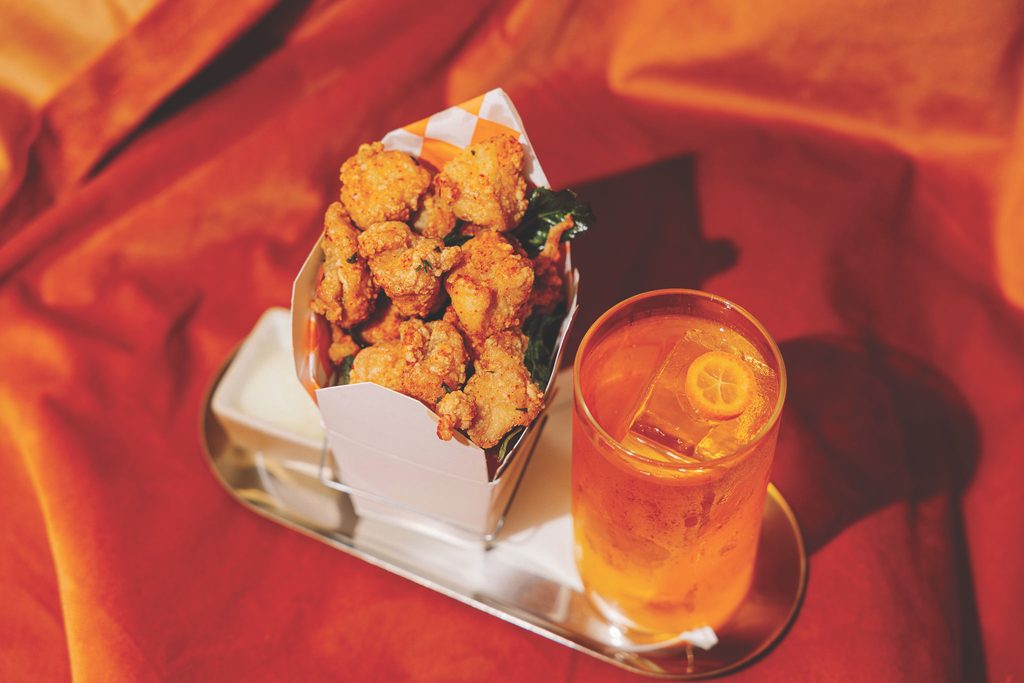
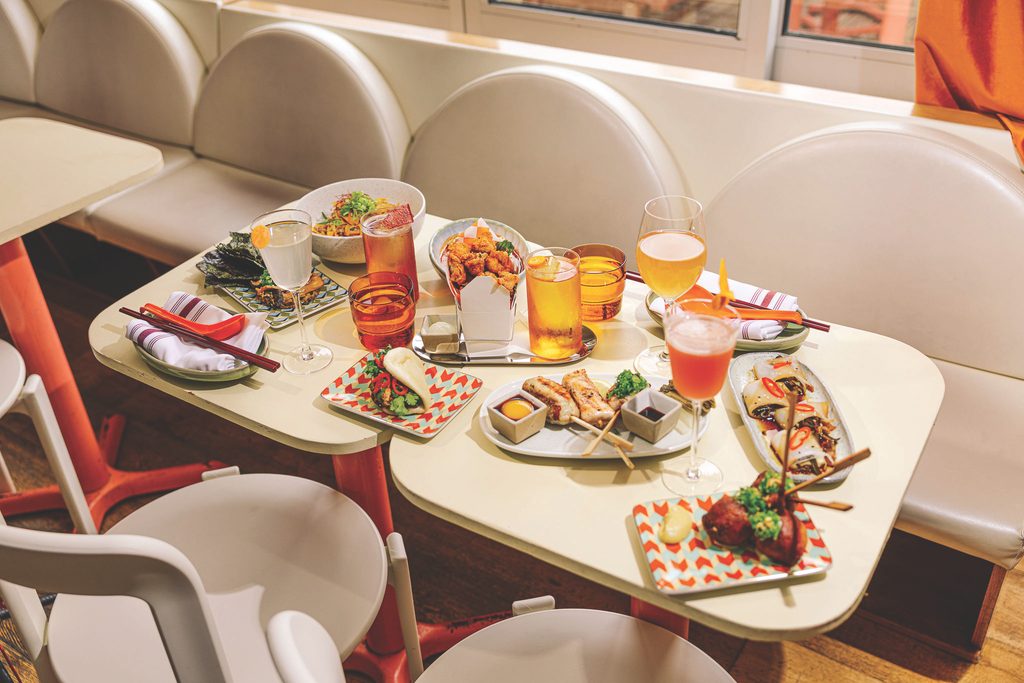
Chick explains that Simpl Things needs more than one entry point because the business changes character over the dayparts. For the daytime hours, the offer is bread and pasta, brunch and cocktails. At night, the emphasis shifts focus to the calibre of the drinks, the mood of the room and its ease as a date spot, gathering place or neighbourhood local. Neither message attempts to itemize or catalogue the operation, instead the brand is about the place, giving potential guests a clear occasion or reason to choose it.
Operators under pressure often move in the opposite direction. They add another influence, another trend and reach out to ever-new audiences until the concept becomes impossible to manage—or even explain. The business may contain an abundance of great ideas, but they struggle to add up to a legible whole.
“You can lose the core essence of your operation when you try to impress everybody,” Chick says. “You almost have to pick a lane and stick with it and then double up on the quality and consistency of that lane.” The bars she admires make coherence visible in very different ways. Mother is organized around fermentation. Library Bar draws on the rituals, storytelling and service theatre of a grand hotel bar. Pompette follows the seasons and its farm-to-table sensibility. At Civil Works, the history of the former Waterworks building and Toronto’s garment district extends into a cocktail menu presented as a fabric-swatch book.
These are not interchangeable versions of “experience.” Each bar has developed its own identity and grammar. Once guests understand the language, the drinks can become more adventurous because the room has already taught them how to interpret the innovation that follows. “People who are killing it aren’t just killing it because they offer good things,” Chick says. “There’s a through-line in their concept and a uniqueness that people seek out whether or not they’re drinking.”
She also acknowledges that social media can reward the wrong kind of theatre. Spectacle untethered from identity or purpose has no cumulative value: a guest may remember the showstopping item or event but forget where they experienced it, leaving the operator caught in a perpetual cycle of escalation, forever staging the next spectacle without building recognition or loyalty. “It does bring new customers in,” Chick says. “But it doesn’t retain them, and it doesn’t convert the way you would want it to unless the Instagram moment means something to your space.”
The second visit is the business model.
Opening-week crowds and a burst of social engagement may flatter a new concept, but neither can sustain it. Chick asserts that the more consequential question comes after the first visit. “When operators form a new concept, they think their job is to impress new guests,” Chick says. “That has shifted. Your job really is to preserve existing guests, because a lot of guests have stopped believing in going out.”
“Believing” is the important word. The hesitation is not simply about price; it reflects a loss of confidence in the outing itself. Chick and her partner often choose to cook at home because dining out too frequently ends in disappointment.
The calculation also extends well beyond the cheque. Transportation, parking, childcare and the time required to cross a spread-out city all become part of the cost. “Now your meal is no longer your $25 burger and your $25 drink. It’s also your $25 parking,” Chick points out.
Bars have an advantage in this environment. Long-term commitment can begin with a single drink, in a place that offers what home cannot easily reproduce: the presence of other people, the possibility of discovery and somewhere to spend time without becoming the host. “People want to experience new things, but they need to feel comfortable,” says Chick. “They want to experience new spaces, but they want to make sure that whatever they’re spending is worthwhile. People don’t bar hop anymore. Financially, it’s not feasible, and communities are more spread out. They want a one-stop shop: a little snack, a little drink.”
Programming in the bar space becomes part of a retention strategy rather than a promotional tactic. At Simpl Things, the monthly Simpl Exchange series brings in a guest chef, pairs drinks with the menu and extends the collaboration beyond a single night. “I actually keep one of their dishes throughout the month, so there’s a continuation of community,” Chick says. She also notes that the lingering dish gives the event an afterlife and introduces another creative voice while reinforcing the bar’s central offering and unique proposition: food and drinks can receive equal attention in the same small room. “A lot of times, people throw a one-off banger. People show up, they experience it and then it doesn’t continue.”
Collaboration can also broaden a bar’s reach without the expense and disruption of rebuilding its kitchen. Chick points to The Dirty Laundry’s Sunday takeover series with local restaurants. The bar supplies the room and drinks; the visiting restaurant brings its cooking and part of its audience. Regulars encounter something new, while both businesses gain access to a community larger than their own.
That flexibility is especially valuable when food costs leave little room for experimentation. Beverage-led programming can create an occasion without the labour, inventory and waste of a major menu overhaul. For Chick, innovation extends to the occasion itself: “It’s not only the way you present the drink,” she says, “but the way you present a day around that drink or your program.”
Chick also urges operators to see “neighbours as catalysts versus competitors.” As guests visit fewer venues in a night, collaboration allows nearby businesses to share audiences and give people more reasons to stay.
Don’t lose sight of the blueprint.
The explosion of new products and techniques has done more than expand the drinks menu. It has weakened some of the crucial foundations bartenders once learned to judge their work.
When Chick began bartending, education usually started with structure: learn how a spirit is made, learn the classic cocktail families, then make substitutions inside a known template. A sour had a recognizable architecture. Change the sweetness, proof or dilution and an experienced bartender could anticipate the result. “Now there is no blueprint,” she says. “There are so many new products that don’t behave the same way as when we started 10 years ago.”
A non-alcoholic spirit may contribute little of the body, aroma, heat or dilution supplied by the ingredient it nominally replaces. Ferments, distillates, clarification methods and specialized equipment can transform flavour and texture beyond the assumptions built into old ratios. The classic recipe remains useful, but substitution alone no longer guarantees balance. Chick’s response is to teach tasting before taxonomy. She wants students to identify what a product is doing in the glass, articulate their own response and make sound decisions from there and notes that the subjectivity of taste only underscores the need for judgment.
The knowledge gap has been compounded by a curtailing of apprenticeship time. Chick estimates that the pandemic cost the industry two or three years in which junior workers would ordinarily have learned beside experienced bartenders and managers. Businesses reopened into a labour shortage, then advanced staff rapidly to catch up. These untested workers were then expected to write programs before they had been given the time or resources to develop a foundation. “Before, it would take four or five years to even touch a managerial role,” she says. “Now it’s: I know you just learned how to use a rotovap, which is far beyond what anyone needs in year one of bartending. Do you actually know why this whisky works best in an Old Fashioned?”
The rotovap is not the problem. Technique without judgment is just theatre.
The arrival of AI has been a further accelerant. While Chick has no objection to using it for research or a first pass at a tasting note, she points out that a palate cannot be generated. “You still need your own perspective,” she says. “You need to form your own opinions and make decisions based on how you experience things as an individual person.”
An experienced bartender can read a generated recipe and see the imbalance hiding inside a seemingly plausible cocktail concept. And Chick says you can hear the result when guests express surprise that a cocktail tastes balanced. “I’m like, is that not the norm?” she says. “That’s when I know the general level of acceptance of what is good—and what isn’t—has declined.”
The consequences travel quickly from craft to commerce. A bartender who cannot explain why a drink works will struggle to guide a guest through an unfamiliar list. Training, service and sales meet in the confidence to make a recommendation—and the judgment to deserve the guest’s trust.
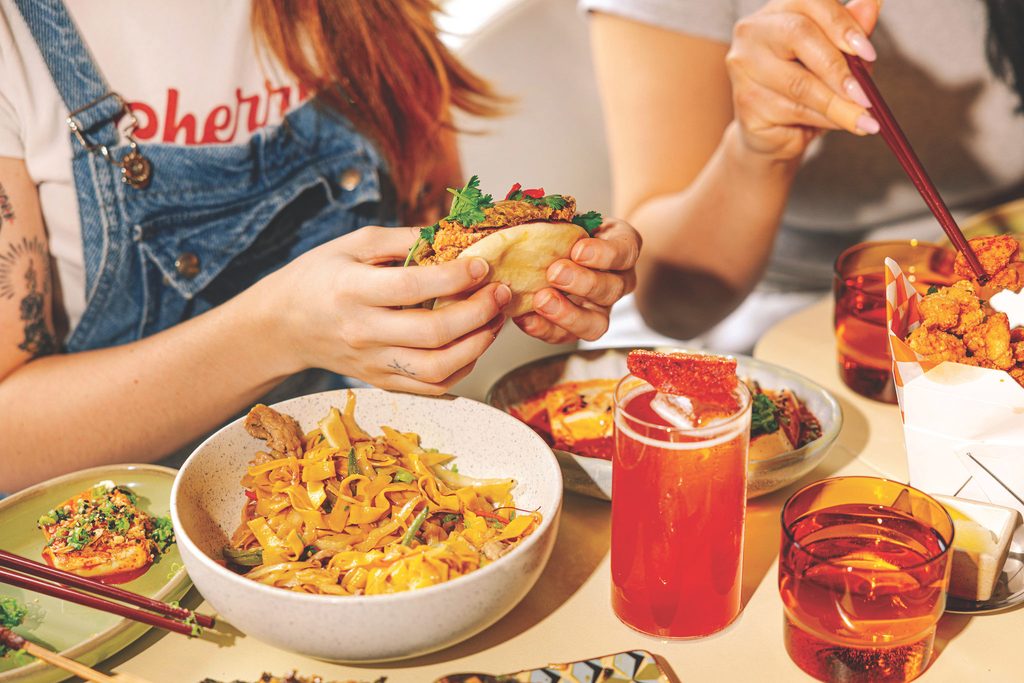
Move moderation to the centre of the bar experience.
Declining alcohol consumption is often framed as an existential problem for bars. Chick draws a more useful conclusion. Guests may want less alcohol without wanting less pleasure, community, or celebration. A bar that offers only one way to participate has made its own market smaller.
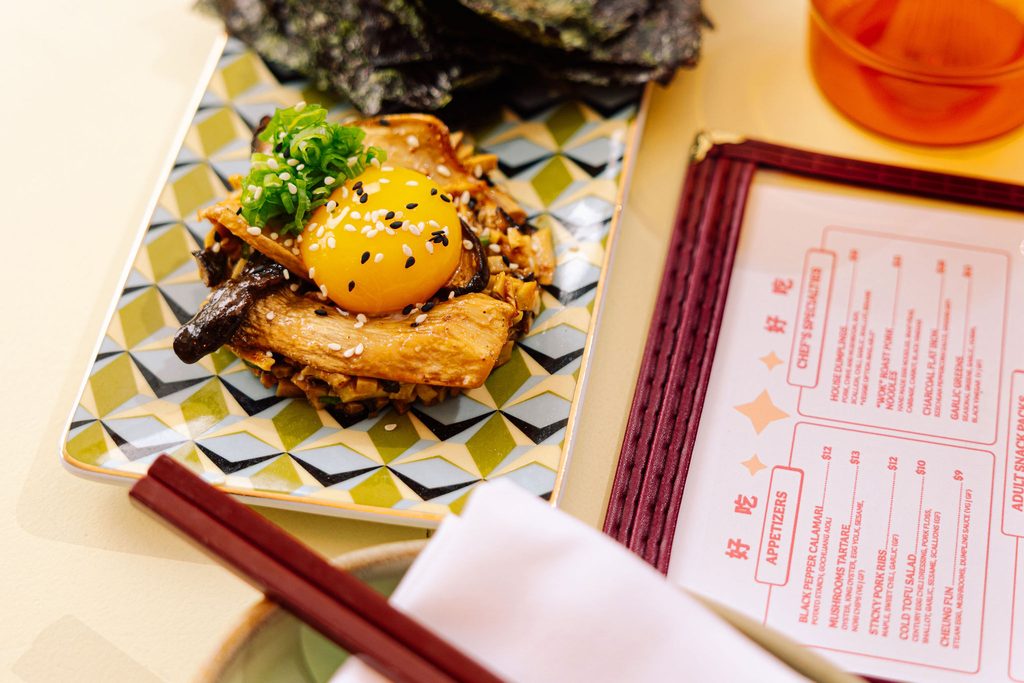
At Simpl Things, a guest might order a cocktail, switch to something zero-proof, then return to alcohol. Others choose a one-ounce cocktail or a three-ounce wine pour because they want to taste several things without committing to full servings. Chick notes that smaller formats have been common in parts of Asia for years, and are gaining ground here for an uncomplicated reason: people are paying closer attention to how alcohol makes them feel. “Even as a Millennial, I don’t drink nearly as much as I used to,” she says. “It’s not because I don’t want to; my body can’t handle it. I appreciate being able to have the three-ounce glass of wine and the mini cocktail, because you still want to try things.”
This is a more fluid pattern than the old division between drinkers and non-drinkers. The same person may move between alcohol volumes and categories over the course of one evening. Menus designed around that movement support a longer, more comfortable visit without treating moderation as abstention.
For Chick, a considered zero-proof selection has ceased to be a promotional hook. It belongs to the basic contract. “No one’s coming in saying, ‘I know you have really good non-alcoholic cocktails; that’s why I’m coming,’” she says. “It’s an expectation now, which I love. It means we’ve raised the bar on how we speak about sessionable drinking.”
The zero-proof list is also table economics. When a group chooses a venue, and one person cannot find an appealing drink—or food that accommodates an allergy or dietary need—the operator risks losing the whole booking. Inclusion determines who can enter the experience without negotiation, and the menu language and presentation should lower that friction still. While Simpl Things uses the term “zero proof” because it is factual and suits the menu, staff do not correct guests who ask for a mocktail. Chick does not share the industry’s anxiety about the word being inherently unsophisticated and suggests it has value for generalist establishments because the word is immediately legible and accessible.
Chick is intrigued by fully integrated beverage lists that organize drinks by flavour and show alcohol strength on a scale, much as a restaurant might indicate heat. She has not adopted one at Simpl Things because she does not think all of her guests are ready for it. The correct menu language is always local. Its job is to help a bar’s guests order products with confidence.
Believe in the product.
Chick describes good bars as third places, but the term means little without repeat business. “The quintessential duty of a bar owner and operator is to instil confidence in guests again,” Chick says. “You have to maintain quality and consistency while presenting something new—but not so new that they won’t understand it. They want to experience new things, but they need to feel comfortable. They want to know the $50 or $60 they’re spending is worthwhile.”
The challenge is to make discovery feel worthwhile.
Operators used to have more time to find their footing. Chick recalls when Toronto was a “turnkey city” where density and novelty could sustain new concepts while their identity took shape. That cushion is gone. Operators now need a precise understanding of whom they serve, what those guests should expect and what will bring them back.
Chick predicts that newer establishments will look different from their predecessors: fewer full-strength drinks, more food, guest collaborators and more space on the menu for choices once treated as electives, but she believes bars’ essential purpose will remain intact. Bars will continue to offer a room where people can feel looked after, encounter something beyond the reach of their home kitchen and leave satisfied that the night justified the spend and effort.
“When guests stop believing in the product,” Chick says, “everyone loses.” The opportunity now is to give them a place worth leaving home for—and worth returning to.
About Evelyn Chick
Beverage & Hospitality Expert, Serial Entrepreneur

Evelyn is a highly accredited specialist in the world of wine, spirits, bar, and beverage. She is a serial entrepreneur, hospitality mentor and consultant, developing efficient, acclaimed and cutting-edge bar programs for media outlets, multimillion dollar venues and notable brands.
Under her hospitality company ‘Evelyn Chick Projects’ are Ahma, a dynamic event space, ‘LOC’ Love of Cocktails, an experiential events company and SIMPL THINGS, an award-winning cocktail and snack bar named by Canada’s 100 Best, and as ‘One to Watch’ on North America’s 50 Best Bars in 2024, and Top 100 list in 2025.
Named one of Imbibe Magazine’s ‘75’ – an annual list of the people, places, and organizations that will shape the drinks world in the coming year, and Canada 100 Best’s ‘ICON’ Award 2025, Evelyn is thrilled to be a catalyst in the rapid growth of Canada’s vibrant food and beverage culture.
Follow Evelyn: IG – @evelynchick | @evelynchickprojects | @simplthings.to
Keep Reading
BACK TO MENU