
Restaurants Are an Economic Powerhouse
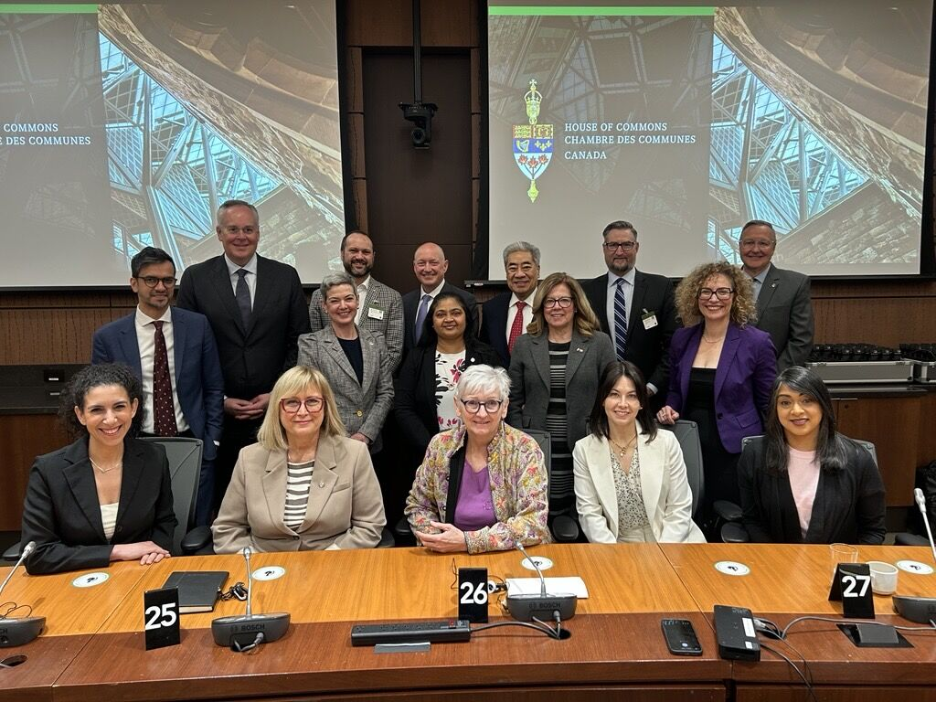
I was back in Ottawa recently as part of Restaurants Canada’s regular and ongoing interactions with federal decision-makers, raising our industry’s profile and its importance to the national economy as we push on our advocacy priorities.
Restaurants Canada had a great opportunity to represent our industry in a meeting in Ottawa with the federal Liberal Economic Growth Caucus on April 21. I was fortunate to be joined by a delegation of leading industry CEOs and independent operators bringing their business realities directly to the table to make the case for what this industry needs to grow. It was a very productive and candid conversation with Liberal Members of Parliament on the unique role that restaurants play as a key driver in the economy as Canada’s fourth largest private sector employer, contributing 4% of Canada’s GDP, creating jobs, and strengthening communities. Meetings with this Caucus are by invitation only and so we were very pleased to have this chance to inform their recommendations to the Prime Minister on the government’s broader economic growth agenda. I am grateful to our members who joined me in Ottawa for this important discussion.
I also joined Minister Rechie Valdez, Secretary of State for Tourism, for a national tourism roundtable as part of National Tourism Week. I used the roundtable to reinforce that restaurants serve as the economic and job creation cornerstone of Canada’s tourism sector from coast to coast. Of course, the restaurant industry goes beyond tourism, reaching into every community across Canada. Part of our mission is to create more champions for our sector at the Cabinet table, and Minister Valdez is among those voices.
Q12026 Quarterly report
The latest edition of our Quarterly report is now available exclusively to Restaurants Canada members. Be the first to read about the trends impacting your business, foodservice sales forecasts and how the industry is responding.
As you will see in the report, Canada’s restaurant industry is under growing financial strain in early 2026, with persistent affordability challenges, rising operating costs, and uneven consumer spending continuing to erode profitability. The impact ripples through communities, supply chains, and local economies.
We continue to raise these financial challenges with federal and provincial governments. Feeding people is foundational to Canada’s ambitious economic agenda, and Restaurants Canada is calling on governments to take targeted action that both improves affordability for Canadians and supports investment in our job-creating sector.
CPP Deductions Being Reduced – Spring Economic Update 2026
Speaking of targeted federal measures that can provide important support to restaurants, the federal government’s Spring Economic Update on April 28 contained one that Restaurants Canada has been pushing for the past few years – a reduction in payroll taxes. As a leading employer in the country and a labour-intensive industry our sector is disproportionately impacted by payroll taxes. The federal government is lowering the contribution rate of the base Canada Pension Plan from 9.9 per cent to 9.5 per cent, effective January 1, 2027. Our Chief Economist, Chris Elliott, estimates that for a 25-employee restaurant, the annual savings work out to over $1,200, with a savings for the industry at over $53 million annually.
Webinar – How Foodservice Businesses Can Prepare for Major Sporting Events
With the FIFA World Cup 2026 just around the corner, don’t miss this timely discussion on how to anticipate demand, manage pressure on your team and operations, and deliver a strong guest experience when it matters most.
When: Tuesday, May 5 at 2 pm ET/11 am PT
Hire locally. Scale fast. Meet job seekers where they are at. Meet Kibbi.
Kibbi is an app-based platform that connects you with job-seekers in your community. Kibbi screens the candidates for you, and helps you grow your team. Restaurants Canada members can access tools designed to simplify hiring, connect with local job seekers, and manage applications efficiently — all in one place.
Recognizing Industry Excellence
Restaurants Canada extends a special congratulations to the team at Wendy’s for winning the KLM Green Leadership Award for their Good Done Right strategy, recognizing the system’s environmental leadership and the way sustainability continues to scale alongside business growth. Read Wendy’s 2025 Corporate Responsibility Report to see how they are implementing sustainability initiatives throughout their chain of operations.
FEDERAL UPDATE
From Matt Triemstra | Vice-President, Federal Affairs
Ottawa Meetings
Your Restaurants Canada advocacy team continues to be active in Ottawa. Every meeting with a Minister, Member of Parliament, political staff, or departmental official is an opportunity to reinforce the significant economic contribution of our sector and to highlight the importance of supporting the restaurant industry with focused and strategic policy. We are building champions through this regular outreach and education about the important role that restaurants play in the Canadian economy and in every community across the country.
Recent meetings included productive discussions with Paul Moen, Chief of Staff to the Minister of Industry, and MP Karim Bardeesy, Parliamentary Secretary to the Minister of Industry. We also engaged with Pauline Rochefort, Parliamentary Secretary to the Secretary of State (Rural Development), Senator Martine Hébert and MPs Tamara Kronis and Marilyn Gladu, to build broad support for our priorities. Additionally, we presented the economic state and labour needs of our industry directly to a broad team of government officials at Employment and Social Development Canada representing the Temporary Foreign Worker program, Youth Employment Policy, and Economic Policy.
TFW Rural Cap Update
Since the federal government announcement on March 13, offering to increase the Temporary Foreign Worker (TFW) rural cap from 10% to 15%, Restaurants Canada has been actively advocating for all provinces to adopt this critical measure. With the summer season rapidly approaching, we are continuing to apply pressure to help restaurants meet their workforce needs.
Currently, the provincial landscape is a patchwork of support for the temporary cap. Manitoba, Nova Scotia, and New Brunswick have fully committed to the 15% cap increase and to maintaining their current TFW proportions. British Columbia and Quebec have agreed to retain current proportions but have declined the cap increase.
Conversely, Alberta and Nunavut have opted not to participate in the temporary increase. This leaves Saskatchewan, Ontario, Prince Edward Island, Newfoundland and Labrador, Yukon, and the Northwest Territories still undecided. Our team is focused on moving these undecided jurisdictions by emphasizing that this measure will make a meaningful difference for rural restaurants. While TFWs account for only 1.5% of our industry’s total national workforce, they are an essential last resort for operators in some regions.
SUSTAINABILITY UPDATE
From Jillian Rodak | Vice-President, Sustainability
Advocacy on federal plastics regulations
Last week, Restaurants Canada met with Environment and Climate Change Canada’s Associate ADM Judy Meltzer, and with Nicole Ellement, Senior Advisor to the Minister of Environment and Climate Change, to discuss our industry’s hard work on plastic reduction and to clarify the direction of federal plastics regulation. Both ECCC officials and the Minister’s Office were encouraged by the success stories from our industry and responsive to our position of focusing on strategies that account for today’s economic environment, guest safety standards, and convenience expectations. At this time, it is clear that no plans are underway to expand the single-use plastics ban. As we develop further engagement opportunities with the federal government on this issue, Restaurants Canada will be meeting with ECCC in the coming weeks to discuss key concerns with the Federal Plastics Registry.
Delayed again: Toronto’s Single-Use and Takeaway Item Reduction Strategy
Last week, Restaurants Canada was informed by City of Toronto staff that the Single-Use and Takeaway Items (SUTI) Reduction strategy will be brought to City Council in 2027, delayed from May 2026. They will use this time to continue to consult with stakeholders and further investigate feedback they received from various organizations. Restaurants Canada will continue to work with city staff to ensure our industry’s concerns are incorporated into future iterations of the strategy.
ATLANTIC CANADA UPDATE
From Janick Cormier | Vice-President, Atlantic Canada
Prince Edward Island
Restaurants Canada met recently with PEI’s Workforce Development Minister Zack Bell and Economic Development Minister Jenn Redmond. The discussion focused on workforce challenges and increases in operating costs for members. It was an opportunity to highlight for the Ministers the significant contribution of our industry to the provincial economy ($565 million in sales last year), including to the agriculture, fisheries and tourism sectors on the island. The Ministers committed to continuing the dialogue in an effort to identifying measures to address the serious challenges facing our industry which will help support the broader economy of the province.
Nova Scotia: Meeting with AGFT – Training for Door & Security Staff
As Restaurants Canada has previously reported, the Government of Nova Scotia passed legislation in 2025 that will require door staff/security employees in clubs and bars to have criminal background checks and training. Last week, we met with officials from Alcohol, Gaming, Fuel and Tobacco (AGFT) to discuss the proposed regulations, which are expected to be approved by Cabinet before the end of May. The legislation explicitly states that the new requirements come into force on June 1, but Restaurants Canada has made it clear to AGFT that compliance by June 1 will be impossible given that the regulations have yet to be finalized. We have been assured that there will be a transition period during which operators will not be penalized. The intention is to have an education-based approach before enforcement action begins. We continue to work with AGFT to address areas of concern for members.
Newfoundland and Labrador
Last week, Finance Minister Craig Pardy released the province’s 2026 budget. While there were no measures that specifically targeted the foodservice industry in the province, there are some measures that indirectly affects our members such as tax cuts for small businesses, the establishment of a Red Tape Reduction Office, and some investments in tourism marketing and air access. You can see more details on Budget 2026 here.
CENTRAL CANADA UPDATE
From Kris Barnier | Vice-President, Central Canada and the North
Manitoba PST Fairness
Budget 2026 exempted prepared grocery meals from PST but excludes comparable restaurant meals. Restaurants Canada met with Finance Minister Sala to stress the need for equal treatment between restaurants and grocery stores and noted that this proposed policy limits consumer choice. We have followed up in writing to outline the negative economic impact on restaurants of this policy and to bring fairness to the policy by extending PST relief to restaurants.
LCBO – New Service Level Agreement (SLA) with Suppliers
This week, licensees in Ontario will be receiving communications from LCBO to provide information on a new Service Level Agreement (SLA) between LCBO and supplying sources that comes into effect on June 1. The new SLA formalizes policies and procedures for suppliers, which include:
- Introducing penalties aimed at ensuring that reliable and consistent service is provided to LCBO’s wholesale customers.
- Allowing supplying sources to charge permitted delivery and related service frees directly to wholesale customers. This is described by LCBO as optional, noting that some suppliers may continue to include distribution costs in the product price.
- Licensees will be able to opt-in to additional fee-based services from supplying sources (e.g. delivery outside of business hours).
LCBO indicates that licensees will have full visibility of any fees via a delivery rate card tool provided by the LCBO in advance of June 1, to inform decisions prior to purchase.
In June, LCBO will also invite eligible domestic and import suppliers and/or agents to apply to be listed in LCBO’s wholesale product catalogues. These suppliers can opt-in to one or more wholesale catalogues (grocery, convenience, hospitality licensees, LCBO Convenience Outlets, duty-free). Over the coming months, eligible products will be listed in the wholesale ordering platform and participating suppliers and/or their agents may start contacting hospitality licensees to inform inventory forecasts.
Ontario: Temporary Foreign Workers (TFWs) cap extension
Restaurants Canada has held numerous meetings with the office of the David Piccini, Minister of Labour, Immigration, Training and Skills Development and with the Premier’s Office to urge them to opt into the federal government’s offer to allow employers in rural regions to temporarily increase their TFW cap from 10% to 15%. We remain in regular contact with the government to encourage movement on this front.
FIFA World Cup 2026 – what you need to know
The 2026 FIFA World Cup tournament will run June 11 to July 9. Toronto will host six matches at Exhibition Place on June 12, 17, 20, 23, 26, and July 2. Restaurants can show matches as part of regular operations without a license, provided there is no ticketing, sponsorship, or large-scale activation. Larger or commercial viewing events likely require a FIFA public viewing license. Extensive guidelines can be found here. Significant activity is expected around Exhibition Place and at the Fan Festival at Fort York and The Bentway, and there will be some street closures and restricted access near event venues. Destinations Toronto encourages businesses to share their plans to promote the World Cup, including viewing parties and special menus by completing a content submission form. Visit Destination Toronto for more information on how to prepare.
And as noted in Kelly’s report, members are encouraged to participate in the webinar – How Foodservice Businesses Can Prepare for Major Sporting Events.
WESTERN CANADA UPDATE
From Cheryl Maitland Muir | Vice-President, Western Canada
Metro Vancouver Solid Waste Management Plan
On April 24, Restaurants Canada presented to the Metro Vancouver Sewerage and Drainage District Board to share the industry’s perspective on the region’s draft Solid Waste Management Plan update. While the industry supports efforts to improve waste‑diversion rates, we raised concerns about a patchwork approach to regulations, proposals to expand the use of reusable dishware for dine‑in service, and potential increases to organics tipping fees. The plan is expected to be submitted to the B.C. Minister of Environment and Parks for final approval later this summer. Restaurants Canada will continue to advocate with both the Province and Metro Vancouver for waste‑management approaches that reflect the operational realities of restaurants.
BC License-to-Licensee Alcohol Sales
Restaurants Canada is working with members to advance advocacy for licensee‑to‑licensee sales in British Columbia, which is critical for business continuity and access to specialty products. Members interested in supporting this effort are encouraged to contact Cheryl Maitland Muir at cmuir@restaurantscanada.org.
Alberta Workforce Challenges
Restaurants Canada attended the Premier’s Summit on Fairness for Newcomers on April 14 and engaged with stakeholders and representatives from the Premier’s Office to discuss workforce challenges facing the restaurant sector. Discussions also highlighted the industry’s efforts to increase youth employment and the essential role that immigrants play in supporting a vibrant and growing restaurant sector.
Saskatchewan
Last week, Restaurants Canada was in Saskatoon and Regina to meet with members, attend the SLGA and Hospitality Saskatchewan Food and Beverage Expo and engage with senior representatives from the SLGA, the Premier’s Office, and key government ministries. In our meetings, we shared an update on the economic impact of the restaurant sector in Saskatchewan and continued advocacy efforts focused on securing equal access to wholesale liquor pricing.
With gratitude,

Kelly Higginson
